Friday, July 26, 2013

Shadow Banking in China is a Symptom

Shadow banking as the symptom and not the disease
Why do these exist and why do regulators tolerate them? As Zhang rightly points out and a few commentators observed post-Saradha, shutting down shadow banks can be done but amounts to shooting the messenger. The real culprit is financial repression. In the absence of high-quality, formal options to save, invest and borrow, people are forced to deal with the more “shadowy” segments of the financial system. In its extreme form, investments in financial assets of any form are rejected in favour of physical assets. In its Financial Stability Report, RBI acknowledges that “the shift from financial assets to real estate and gold has become stark. Inflation, low penetration of banking services, credibility of financial institutions in the wake of mis-selling of products and financial frauds, low post-tax returns on bank deposits, negative/low real interest rates etc could be some of the issues that need to be addressed to re-direct non-financial savings towards financial savings”.
And the South China Morning Post
How interest rate controls created a shadow banking system in China
As a result, some depositors would like to receive a higher rate. At the same time, some borrowers and banks are willing to pay higher rates, because they can still make a profit on the higher rates. Thus the policy has created a shadow banking system paying a higher rate of interest than the official rate.
This is causing concern that these wealth management products are being used to "repackage old loans and prop up risky companies and projects", and that "shadow banking is helping drive the rapid growth of credit in a weakening economy, which could lead to - in the worst situation - a series of bank failures", the report said.
This author seems to think that bribery and the black market for money will vanish with liberalization of interest rates. But there will always be borrowers who do not qualify at any interest rate who will bribe for a loan at all or to fudge the rate. State enterprise itself uses its position to obtain unreasonably low rates and always will. Interest rate liberalization will not end corruption, it will squeeze out the middlemen who are repurposing loans for an allowed activity into a banned one, which will remove a level of corruption from large projects. Just because interest rates can float doesn't suddenly mean small business is going to get loans from a state bank.

Wednesday, July 24, 2013

China bans new government buildings for five years

This time they were also smart enough to ban some of the work arounds used to funnel money to construction during previous restrictions. China Orders Ban on New Government Buildings
Most tallies of total local government debt in China tend to be in the vicinity of $2 trillion, equal to three months of China’s entire economic output, but some estimates are even higher.
“We should put into perspective that the problem of local government spending on buildings is not the most serious problem facing China’s economy,” Mr. Li said in a telephone interview from Beijing. “The property bubble, shadow banking and the state-owned enterprise monopolies are far more risky.”

Sunday, June 23, 2013

Hamilton, ON house prices suffering from substitution effect

Bidding wars, soaring house prices hit Hamilton real estate
The former librarians were shocked to discover that for about half the price, $295,000, they could get everything they’d hoped to find in Toronto — a cool condo close to a burgeoning arts scene, thriving cafes, up-and-coming restaurants, and bike paths that meander along a waterfront undergoing a rebirth.
There they discovered elegant, and sometimes unloved, brick Victorians, charming workers’ cottages and even Rosedale-like mansions. And they were all shockingly affordable — at least by Toronto’s sky-high standards.
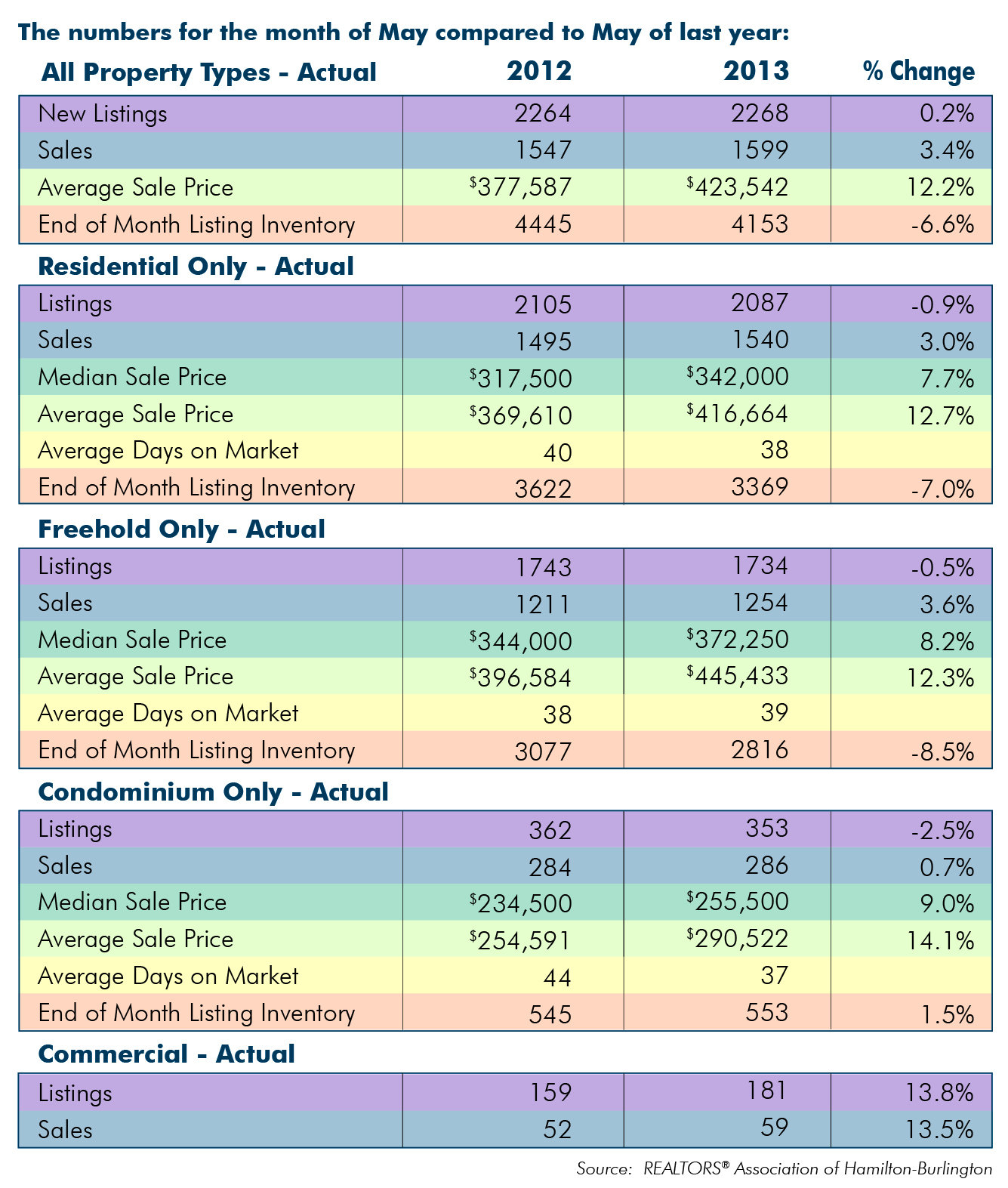
Median price for residential was $342,000 last month according to the RAHB chart for May 2013
Median household income was $79300 using statcan.gc.ca and applying the last 4 years average median increase to the latest data.
Resulting in a median multiple of 4.3x.

Not sustainable, but more interesting in the medium term is what will the fallout be. As Toronto wanes will Hamilton continue to be seen as a boom town and weather the national downturn better, or will a contraction hit harder due to the weaker base to fall back on. If it remains clear that the transport project will finish I expect more of the former.

Friday, June 21, 2013

A model for future bank bail outs that avoids taxpayers forking over money

Handling of shaky Co-op Group could serve as a model for future bail outs, to henceforth be called "bail-ins", UK's Co-op Bank agrees to £1.5 billion 'bail-in' rescue plan
Co-op Group, which runs supermarkets, pharmacies and funeral services, will retain a majority stake in the Co-op Bank, which has 4.7 million customers. Sources said bondholders are likely to end up with at least a quarter of the bank's shares.

Sutherland said he was confident a "good proportion" of bondholders would support the move, given that coupons on their debt will be canceled making them effectively worthless. If they refused, the bank would face the threat of nationalization.
Analysts have blamed Co-op Bank's problems on its takeover of the Britannia Building Society in 2009.

Industry sources say Britannia, which had lent aggressively on commercial property, was likely to have required a taxpayer-bailout had it not been bought by the Co-op.

Co-op said it would hive off toxic assets worth about 14.5 billion pounds into a 'bad bank,' most of which are from Britannia, as part of a restructuring.
Like Bank of America and Countrywide it really shows how incompetent bank management can be to not understand how much liability they are "investing" in.
Co-op said the bail-in plan will generate 1 billion pounds of new capital this year and 500 million pounds in 2014. This includes a debt-for-equity exchange with the bank's subordinated bondholders.

Tuesday, June 18, 2013

Truck Tonnage Index Indicates U.S. Economy Got a Lift in May

Seasonally adjusted, up 2.3% month on month, 6.7% year on year
By raw numbers up 5.4% month on month. ATA Truck Tonnage Index Surged 2.3% in May
Some of the increase is attributable to factory output rising in May for the first time since February (+0.2%) and retail sales performing stronger than expected in May (+0.6%). Costello added, "The 6.8% surge in new housing starts during May obviously pushed tonnage up as home construction generates a significant amount of truck tonnage."

. . .

He added that tonnage continues to outpace the number of loads hauled as heavy freight (e.g., housing construction materials and sand and water for hydraulic fracturing) is outperforming box trailer (i.e., dry van) freight.
And some background:
Trucking serves as a barometer of the U.S. economy, representing 67% of tonnage carried by all modes of domestic freight transportation, including manufactured and retail goods. Trucks hauled 9.2 billion tons of freight in 2011. Motor carriers collected $603.9 billion, or 80.9% of total revenue earned by all transport modes.


Ad: USDOT Truck markings, decals for commercial haulers

China Credit Bubble is Unprecedented

Total credit has jumped from $9 trillion to $23 trillion since the Lehman crisis and is now 200% of GDP. Each additional Yuan of loans now generates only 0.15 in growth compared to .85 four years ago.

Fitch says China credit bubble unprecedented in modern world history
"There is no transparency in the shadow banking system, and systemic risk is rising. We have no idea who the borrowers are, who the lenders are, and what the quality of assets is, and this undermines signalling," she told The Daily Telegraph.

While the non-performing loan rate of the banks may look benign at just 1pc, this has become irrelevant as trusts, wealth-management funds, offshore vehicles and other forms of irregular lending make up over half of all new credit. "It means nothing if you can off-load any bad asset you want. A lot of the banking exposure to property is not booked as property," she said.
Large project loans over the last decade are reputed to sometimes have no repayment requirement at all, loans plus accumulated unpaid interest were simply rolled into a new loan.

But now the house of cards is starting to wobble. Trust products are starting to default on their short term loans. $2 Trillion in wealth products act as a shadow banking system allowing banks to end run around regulation.

It also flagged worries over an exodus of hot money once the US Federal Reserve starts tightening. "China will face large-scale capital outflows if there is an exit from quantitative easing and the dollar strengthens," it wrote.

The journal said foreign withdrawals from Chinese equity funds were the highest since early 2008 in the week up to June 5, and withdrawals from Hong Kong funds were the most in a decade.
There are several economies that will be strained when the U.S. ends QE.

Monday, June 17, 2013

Housing could hobble wider Australian economy

Commodity dependent economy relying on China, seven rate cuts failing to significantly stimulate, banks relying on wholesale funding. Banks have reduced their exposure but still need 85 billion on funding for the next twelve months, 2/3 from offshore. Like Canada, it all falls to the bond markets.

State Street’s ‘Mr. Risk’: Watch Australia’s Housing Market
Fred Goodwin, a macro strategist at Boston-based State Street, warned on Monday that a steep correction in house prices, while still a low probability, would hobble the ability of Australian banks to raise funds in the bond market given their heavy exposure to mortgages. Such a scenario would choke credit to the wider economy and exacerbate an economic downturn.
His views come as economists from Goldman Sachs GS +1.43% to BNP Paribas BNP.FR +1.09% warn of a growing risk of recession in Australia, a scenario deemed unthinkable even 12 months ago for a country that has enjoyed 21 years of uninterrupted economic expansion.
After 21 years of expansion is a long time on one side of the cycle. How does that make it more unthinkable?

Sunday, June 16, 2013

Former Bank of America employees claim homeowners ripped off customer by lying to them about their loan modifications

When literally no one likes a company, it's probably not just all in the customers' heads.

Former Bank of America workers allege it lied to home owners
The bank allegedly used these tactics [lying about status and denying modifications to qualified applicants] to shepherd homeowners into foreclosure, as well as in-house loan modifications. Both yielded the bank more profits than the government-sponsored Home Affordable Modification Program, according to documents recently filed as part of a lawsuit in Massachusetts federal court.
For example, an employee who placed 10 or more accounts into foreclosure a month could get a $500 bonus. At the same time, the bank punished those who did not make the numbers or objected to its tactics with discipline, including firing.

. . .

The testimony from the former employees also alleges the bank falsified information it gave the government, saying it had given out HAMP loan modifications when it had not.
What does it take to justify making this bank cease to exist? It is not a benefit to banking, the country, the markets, or customers. Or taxpayers.
The court documents paint a picture of customer service operations where managers roamed the floor with headsets, able to listen into any call without warning. Service representatives were told to lie to homeowners, telling them their paperwork and payments had not been received, when in reality they had.

Friday, May 24, 2013

Visualizing losses on house sales

Squaring house prices

Interesting visualization showing the loss plotted against the year of purchase and year of sale in England and Wales.

Graph from Economist.com
 

Chinese influence on Australian Housing Bubble

Australian Housing Bubble Has Chinese Overtones
Australians have gone heavily into debt to buy houses that cost more than ever, especially the land component; and there's no sign this trend will end anytime soon. Mortgage debt has more than quadrupled from 19% of GDP in 1990 to 84% in 2012-- as high as that of the U.S. at its peak where mortgage debt as a percentage of GDP has fallen from 86% in 2009 to 68% in 2012. Negative gearing and easy lending combined to push house prices higher. Looking at affordability as a function of disposable income, both the ratio of total debt and interest payments to disposable income are very high - see the chart below. Widespread mortgage fraud to gain bank credit is asserted by Denise Brailey, the president of the Banking and Finance Consumer Support Association (an organization dedicated to protecting the public against predatory financiers).
Graph from Seeking Alpha
Australia's economy is experiencing increasing reliance on overseas funding, becoming more interlinked with China's growth and business cycle. The Chinese economy grew at 7.8% GDP in 2012, the slowest since 1999, and an increase in global commodity supplies could cause a sharp reduction in Australia's incomes and employment. Australia linked up with China in direct currency trading in March and this puts the country in a tenuous position if trade between the two countries slowed dramatically and would prompt a severe correction of home prices which some feel could take price all the way back to the 1990's.